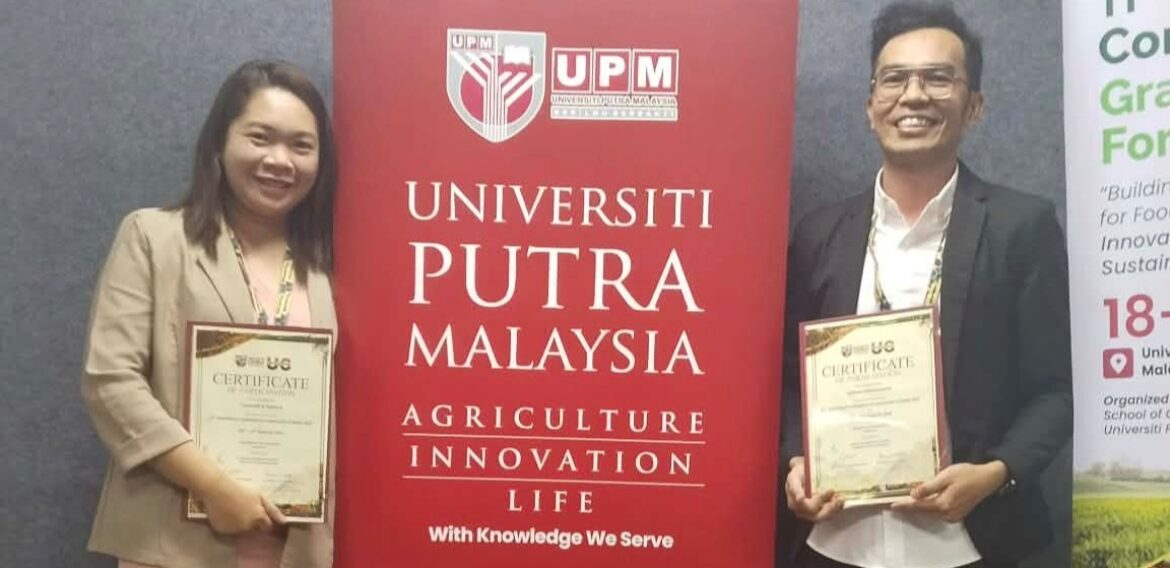
CMU grad students present research at 11th UC Graduate Forum
Research on agricultural land valuation, food security, and socioeconomic development marked the participation of two graduate students from Central Mindanao University at the 11th University Consortium (UC) Graduate Forum in Serdang, Malaysia.
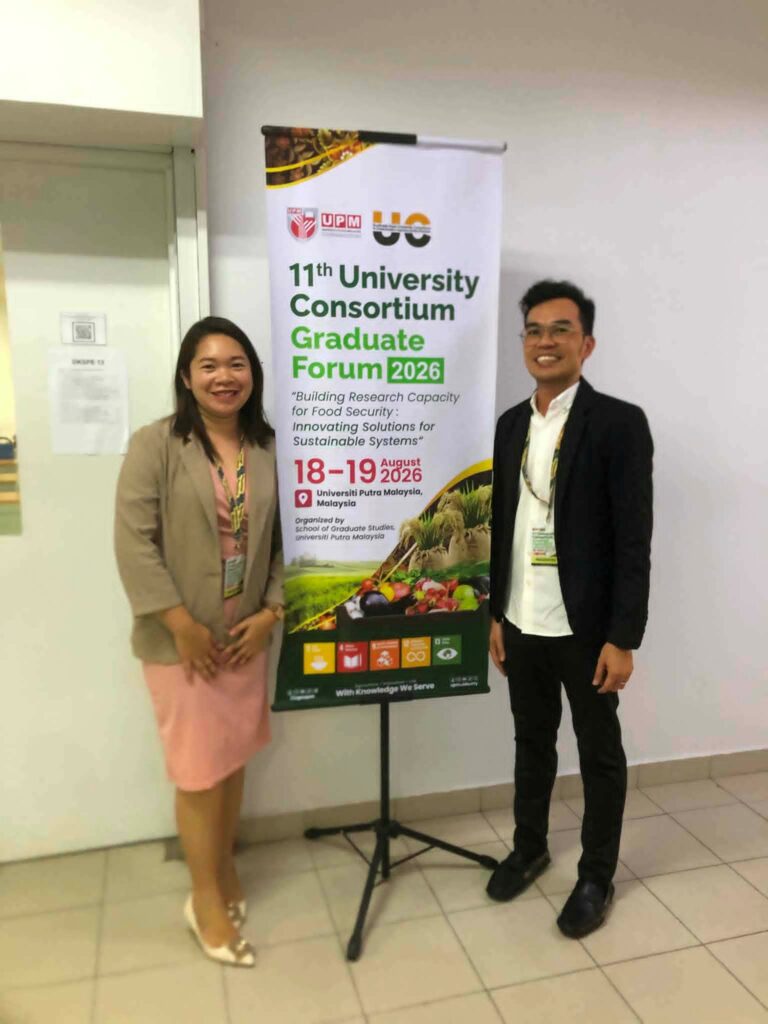
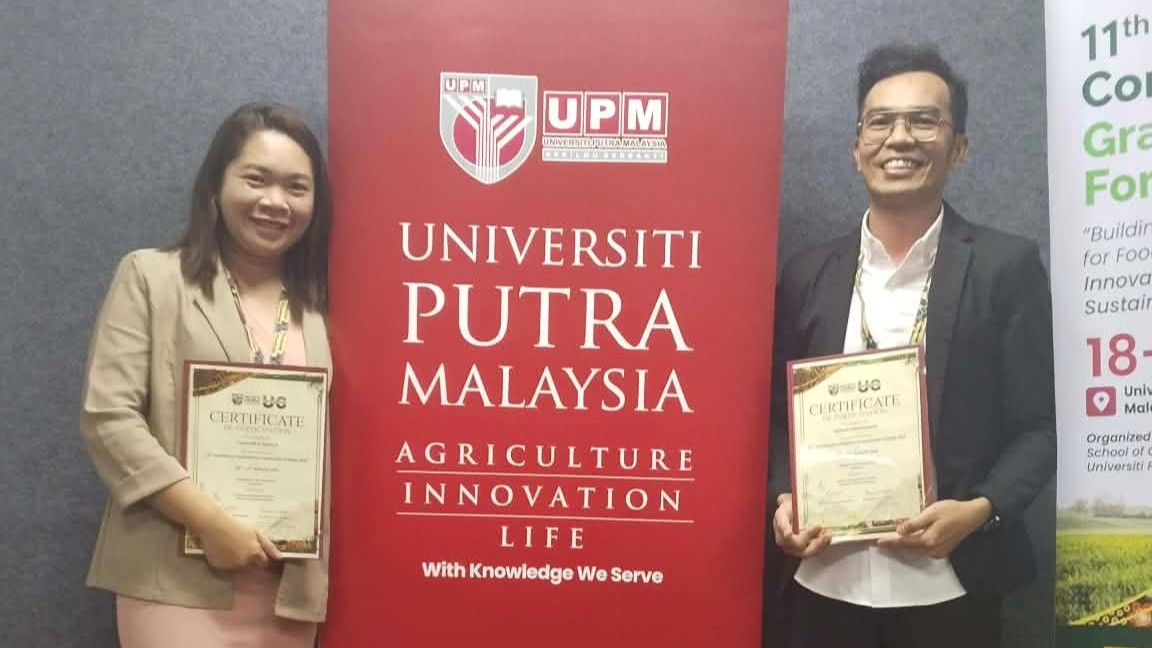
Representing the College of Agriculture, Joemar D. Javier and Charlene N. Badilla presented their respective research studies before representatives from 13 University Consortium member universities. The forum carried the theme “Building Research Capacity for Food Security: Innovating Solutions for Sustainable Systems,” with sessions covering sustainable food security, policy and governance, technology, interdisciplinary approaches, community action, nutrition, food safety, and public health.
Javier presented “Modelling Agricultural Land Valuation in Bukidnon, Philippines: Evidence from a Hedonic Pricing Approach,” while Badilla presented “Effectiveness of S&T Community-based for Inclusive Development (STC4iD) Program in Enhancing Food Security and Socioeconomic Equity among Farmers in Mindanao Regions.” Their studies addressed agricultural land valuation, food security, socioeconomic equity, science and technology interventions, and farmer development.
For Javier, the forum reinforced the need to connect academic research with practical applications. Reflecting on the discussions and exchange of ideas during the event, he noted that research should not remain only within universities or academic publications.
He further highlighted the value of translating research findings into solutions that are inclusive, sustainable, and responsive to farmers’ needs. The experience also underscored for the participants the importance of collaborative and interdisciplinary research in addressing complex food security challenges.
Badilla shared a similar emphasis on making research responsive to communities.
“Research should produce practical and sustainable solutions that address real challenges of the people in the community,” Badilla said, stressing that research should not only generate knowledge but also lead to applications and community action to help address food security.
She also identified collaboration as another key takeaway from the forum. According to Badilla, addressing food security requires researchers, students, and other agencies to work together toward concrete solutions. She said the forum provided an opportunity to share research results, exchange ideas, and learn from fellow students and researchers.
Sustainable innovation and evidence-based approaches were likewise among Badilla’s takeaways, particularly their role in improving agricultural productivity and strengthening food systems.
The forum also included an educational tour to Farm Fresh, the UPM Library, the UPM Faculty of Veterinary Medicine, and the UPM Animal Anatomy Museum. The visits complemented the academic sessions by providing exposure to practical applications of agriculture, research, and innovation.
The international engagement allowed the graduate students to exchange research findings and ideas with fellow graduate students, researchers, and academic leaders while building professional networks. The College of Agriculture identified these as important benefits of the activity, along with opportunities to enhance research knowledge and skills and develop linkages with other ASEAN universities.
The 11th UC Graduate Forum was held on August 18–19, 2026, at Universiti Putra Malaysia.
The activity contributes to SDG 2 (Zero Hunger) through its focus on food security and sustainable agricultural systems, while also supporting SDG 4 (Quality Education) and SDG 17 (Partnerships for the Goals) through graduate research, knowledge exchange, and international academic collaboration. [Iyren D. Neri with information from the College of Agriculture]